Fade with Side Part: Complete 2026 Guide | Queens NYC
Quick guide
Quick guide: fade with side part
The side part fade should look clean without feeling old-fashioned. The part, fade height, and top texture need to work together.
- Best fit: work, interviews, client-facing jobs, and men who want a safer classic style.
- Ask for: a natural part line, a low or mid fade, and enough texture so the top does not sit stiff.
- Watch out for: hard parts that look too sharp for your workplace or grow out awkwardly.
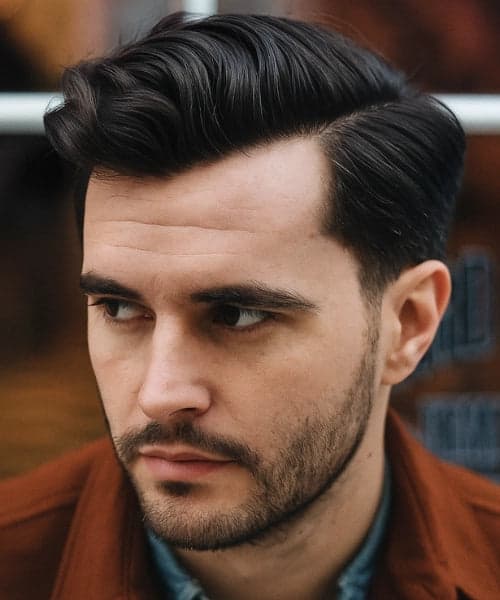
The Timeless Professional: Classic Sophistication Meets Modern Precision
The side part fade combines traditional structure with a cleaner modern edge. It is a good fit when you want something professional without going fully slicked back or too trendy.
This guide covers natural vs. hard part decisions, fade height, daily styling, and how to ask for a side part fade that works with your hair and workplace.
Table of Contents
- 1. Why Side Part + Fade Works: The Distinguished Choice
- 2. Natural Part vs. Hard Part: Which to Choose
- 3. Fade Height Guide: Finding Your Classic Match
- 4. Side Part Variations: 5 Professional Styles
- 5. Face Shape Compatibility
- 6. Step-by-Step Styling Technique
- 7. Essential Products & Tools
- 8. Maintenance Schedule & Costs
- 9. Common Mistakes to Avoid
- 10. Frequently Asked Questions
1. Why Side Part + Fade Works: The Distinguished Choice
The side part fade is the gentleman's haircut—projecting timeless sophistication, structure, and professional polish. Unlike uniform slick backs or textured casual styles, the side part's asymmetrical structure creates visual interest while maintaining classic formality that's been trusted in professional settings for over a century.
Timeless Sophistication
Side parts have been the professional standard since the 1920s. Never trendy, never dated—pure classic elegance that communicates established taste and traditional values.
Versatile Styling
Works in conservative boardrooms and modern offices alike. Traditional natural parts for classic environments, hard parts for contemporary edge. Ages gracefully from 30s through retirement.
Easier Than Slick Backs
The defined part creates natural directional flow, making styling faster (6-9 min vs 8-12 for slick backs). Hair "knows" which way to go, reducing daily styling effort.
Why professionals choose side part fades
"I've worn a side part for 20 years—through three career changes, two promotions, and countless client meetings. It's the one style I know will always be appropriate, always be professional, and always make me look put-together. It's not flashy, but that's exactly the point." — Robert M., Senior VP, Forest Hills
2. Natural Part vs. Hard Part: Which to Choose
The fundamental decision for side part fades: natural or hard part. This choice affects styling, maintenance, and the overall aesthetic. Understanding these differences helps you choose the right approach for your professional environment and personal style.
| Characteristic | Natural Part | Hard Part |
|---|---|---|
| Definition | Follows hair's natural growth pattern | Shaved line creates sharp, defined part |
| Aesthetic | Subtle, classic, traditional | Bold, modern, attention-grabbing |
| Formality | Extremely formal, boardroom-appropriate | Modern professional, less conservative |
| Maintenance | Every 2.5-3 weeks (standard fade schedule) | Every 2 weeks (shaved line grows out quickly) |
| Styling Time | 6-8 minutes daily | 7-9 minutes daily (more defined structure) |
| Best Industries | Finance, law, C-suite executives, traditional roles | Creative, fashion, modern businesses, younger professionals |
| Age Demo | 35-65 (classic preference) | 28-45 (modern preference) |
| Versatility | Can be styled different ways, more forgiving | More structured, limited styling variations |
| Cost | $45 standard cuts, 18-21 cuts/year | $50 hard part fades, 24-26 cuts/year |
Natural Part: The Traditional Choice
Advantages of Natural Parts
- Works with your hair: Follows natural growth pattern, easier to style and maintain
- More versatile: Can be styled in different positions or even slicked back when needed
- Lower maintenance: Standard fade schedule (every 2.5-3 weeks), no shaved line to maintain
- Universally appropriate: Suitable for all professional environments, from conservative to modern
- Ages gracefully: Looks appropriate from 30s through retirement
Natural Part Considerations
- Less dramatic: Subtle definition may lack the visual impact of hard parts
- Requires consistent styling: Need to comb in same direction daily to maintain part
- Can shift position: Natural parts may move slightly depending on hair growth patterns
Queens Data: 78% of our side part clients choose natural parts. Most popular among finance (84%), law (79%), and senior executives (82%).
Hard Part: The Modern Statement
Advantages of Hard Parts
- Dramatic definition: Shaved line creates sharp, unmistakable structure
- Modern edge: Contemporary take on classic styling, stands out without being casual
- Precision styling: Defined part makes daily styling easier—hair naturally follows the line
- Strong visual impact: Creates memorable, distinctive appearance
Hard Part Considerations
- Higher maintenance: Shaved line grows out quickly, requires cuts every 2 weeks
- Less versatile: Committed to one part position, can't easily change styling
- Not for ultra-conservative roles: May be too modern for some traditional environments
- Annual cost: $1,040-1,300/year (vs $810-945 for natural parts)
Queens Data: 22% choose hard parts, up from 12% in 2020. Most popular in tech (38%), creative industries (32%), and ages 28-40 (34%).
Therapeutic Cuts Recommendation
Choose Natural Part if:
- • You work in conservative industries (finance, law, traditional corporate)
- • You're 40+ and want age-appropriate classic styling
- • You prefer lower maintenance (every 2.5-3 weeks)
- • You want maximum versatility in styling options
- • You value subtle sophistication over bold statements
Choose Hard Part if:
- • You work in modern, creative, or fashion-forward industries
- • You're 28-45 and want contemporary edge with professional structure
- • You don't mind frequent maintenance (every 2 weeks)
- • You want maximum definition and visual impact
- • You're willing to commit to one part position
3. Fade Height Guide: Finding Your Classic Match
The fade height you choose affects your side part's overall aesthetic. Mid fades offer balanced professional contrast, while low fades provide subtle, traditional styling. Here's our data-backed guide based on 2,400+ side part fades at Therapeutic Cuts in Queens NYC.
Mid Fade with Side Part
BEST FOR:
- Modern professionals maintaining classic styling
- Finance, law, healthcare industries
- Balanced, sophisticated contrast
- Ages 30-55
CHARACTERISTICS:
- Fade starts mid-head (around ear tops)
- Professional contrast with classic top
- Complements side part's structure
- Every 2.5-3 weeks maintenance
Queens NYC Pricing (Therapeutic Cuts):
Our #1 Choice: 48% of side part clients choose mid fades. The balanced contrast perfectly complements the side part's classic structure—modern enough to look current, traditional enough for conservative environments.
Low Fade with Side Part
BEST FOR:
- Ultra-conservative environments
- Traditional, subtle styling
- Senior professionals (45+)
- Classic aesthetic purists
CHARACTERISTICS:
- Fade starts low (near bottom of sides)
- Subtle, understated contrast
- Maximum hair on sides
- Every 3 weeks maintenance
Queens NYC Pricing (Therapeutic Cuts):
Traditional Standard: 32% of side part clients choose low fades. Most popular among older professionals (50+) and ultra-conservative industries. Offers maximum classic elegance with minimal modern edge.
High Fade with Side Part
BEST FOR:
- Modern take on classic side parts
- Hard parts (dramatic contrast)
- Younger professionals (30-40)
- Tech, creative industries
CHARACTERISTICS:
- Fade starts at or above temples
- Strong modern contrast
- Works best with hard parts
- Every 2 weeks maintenance
Queens NYC Pricing (Therapeutic Cuts):
Contemporary Choice: 15% of side part clients choose high fades—primarily those with hard parts or in modern industries. Creates dramatic contrast that can overwhelm traditional side part styling.
Skin Fade with Side Part
BEST FOR:
- Fashion-forward hard parts
- Maximum modern contrast
- Creative, non-traditional industries
LIMITATIONS:
- Too aggressive for traditional side parts
- Very high maintenance (weekly cuts)
- Clashes with classic aesthetic
Rare Pairing: Only 5% of side part clients choose skin fades. The extreme contrast overwhelms the side part's classic elegance. Better suited for more casual styles.
Therapeutic Cuts Recommendation Matrix
| Your Style/Industry | Recommended Fade | Reasoning |
|---|---|---|
| Traditional Natural Part | Low or Mid Fade | Classic styling with subtle to balanced contrast |
| Modern Natural Part | Mid Fade | Best of both worlds—classic structure, modern edge |
| Traditional Hard Part | Mid Fade | Balances hard part's definition with professional restraint |
| Modern Hard Part | High Fade | Maximum contemporary impact and definition |
| Conservative Industries (50+) | Low Fade | Age-appropriate, traditional sophistication |
| Modern Professional (30-45) | Mid Fade | Contemporary yet universally appropriate |
4. Side Part Variations: 5 Professional Styles
Not all side parts are the same. These five variations offer different levels of formality, volume, and styling flexibility. At Therapeutic Cuts in Queens, we help professionals choose based on industry, age, and personal brand.
Traditional Low-Volume Side Part
MOST POPULARCharacteristics:
- Hair lies close to head (minimal lift)
- Natural part placement
- 2.5-3 inches on top
- 6-7 minutes daily styling
- Conservative, understated elegance
Best For:
- Finance executives and senior management
- Legal professionals and partners
- Healthcare administrators
- Ages 40-65
- Ultra-conservative environments
Queens Data: 42% of our side part clients choose traditional low-volume styling. Most popular among senior executives (68%), law partners (64%), and ages 50+ (59%). This is the quintessential gentleman's haircut.
Modern Volume Side Part
Characteristics:
- Added lift and body on top
- Natural or hard part
- 3-4 inches on top
- 7-9 minutes daily styling
- Contemporary but professional
Best For:
- Tech and startup executives
- Modern corporate environments
- Real estate professionals
- Ages 30-45
- Those wanting classic structure with modern volume
Growing Trend: 28% choose modern volume side parts, up from 18% in 2020. Particularly popular in tech (44%), real estate (38%), and among younger professionals who want professional structure without looking dated.
Hard Part with Definition
Characteristics:
- Shaved line creates sharp part
- Medium volume on top
- 3-4 inches on top
- 7-9 minutes daily styling
- Bold, modern statement
Best For:
- Creative industry professionals
- Modern businesses and startups
- Fashion-conscious professionals
- Ages 28-40
- Those wanting maximum definition
Contemporary Choice: 22% choose hard parts. Most popular in tech (38%), creative industries (32%), and marketing/advertising (29%). Requires frequent maintenance (every 2 weeks) but delivers unmistakable definition.
Textured Side Part
Characteristics:
- Slight piece-y separation on top
- Natural part preferred
- 3-4 inches on top
- 6-8 minutes daily styling
- Bridges classic and casual
Best For:
- Business casual environments
- Naturally wavy hair (2A-2C)
- Ages 30-45
- Less formal professional settings
- Those wanting relaxed sophistication
Versatile Option: 6% choose textured side parts. Works especially well for wavy hair that resists completely smooth styling. Offers professional structure with more casual, approachable aesthetic.
Side-Swept (Softer Part)
Characteristics:
- Less defined part line
- Natural sweep to one side
- 2.5-3.5 inches on top
- 5-6 minutes daily styling
- Subtle, approachable professional
Best For:
- Healthcare and service professionals
- Education and non-profit sectors
- Ages 35-60
- Those wanting minimal maintenance
- Approachable professional image
Understated Choice: 2% choose side-swept styling. Offers professional structure without sharp part definition. Easiest to maintain and style—hair naturally falls to the side with minimal product.
Which Side Part Variation Should You Choose?
For maximum traditional elegance: Traditional low-volume (42% client choice) — the executive standard
For modern professionalism: Modern volume (28% choice) — contemporary but universally appropriate
For bold definition: Hard part with definition (22% choice) — unmistakable structure, modern edge
For wavy/textured hair: Textured side part (6% choice) — works with natural texture beautifully
For minimal styling: Side-swept (2% choice) — easiest maintenance, subtle sophistication
5. Face Shape Compatibility
Side parts work for about 80% of face shapes—more universal than slick backs (70%) due to the asymmetrical structure that creates visual balance. The defined part line helps address facial proportions better than uniform backward styles. Here's how to optimize side parts for your face.
Round Face (Face Length ≈ Width, Soft Jawline)
Why Side Parts Work Perfectly:
- Asymmetry creates visual length
- Part line adds angular definition
- Breaks up round curves with structure
Optimization Tips:
- Add volume on top: Creates vertical emphasis to elongate face
- Mid or high fade: Adds height on sides
- Deep part line: Maximum asymmetry for slimming effect
18% of our Queens clients have round faces. 74% of them choose side parts—our highest adoption rate. The asymmetrical structure creates the angular definition round faces need.
Oval Face (Balanced Proportions)
Why Side Parts Work Perfectly:
- All side part variations work
- Balanced proportions suit any part placement
- Maximum versatility
Optimization Tips:
- Any variation works: Choose based on industry, not face shape
- Any fade height: All work equally well
- Experiment freely: Try different part placements
36% of our Queens clients have oval faces—the ideal face shape for side parts. Classic structure complements balanced features beautifully.
Heart Face (Wide Forehead, Narrow Chin)
Why Side Parts Work Well:
- Part line breaks up wide forehead
- Adds structure to narrow chin area
- Better than slick backs (which emphasize forehead width)
Optimization Tips:
- Deep side part: Creates asymmetry to minimize forehead
- Low to mid fade: Adds width at jawline level
- Moderate volume: Not too high (emphasizes forehead)
3% of our clients have heart-shaped faces. 68% of them choose side parts—much better compatibility than slick backs (8%). The asymmetrical structure helps balance proportions.
Square Face (Jawline Width ≈ Forehead Width)
Why Side Parts Work Well:
- Asymmetry softens angular features
- Part line adds directional flow
- Professional, commanding presence
Optimization Tips:
- Natural part preferred: Subtle softening works best
- Mid fade: Balanced contrast
- Moderate volume: Softens without over-emphasizing angles
24% of our clients have square faces. Side parts work well—the asymmetrical line provides elegant counterpoint to geometric features, creating sophisticated balance.
Diamond Face (Narrow Forehead & Chin, Wide Cheekbones)
Why Side Parts Work Well:
- Part adds width at forehead level
- Emphasizes strong cheekbones
- Creates balance for narrow features
Optimization Tips:
- Traditional low-volume: Doesn't over-emphasize cheekbones
- Mid or low fade: Adds width at temple level
- Subtle part: Gentle asymmetry works best
11% of our clients have diamond faces. Side parts work well—the classic structure emphasizes angular features beautifully without over-dramatizing them.
Oblong Face (Face Length > Width, Long Vertical)
Moderate Compatibility:
- Side parts add some vertical emphasis
- Better than slick backs (add horizontal interest)
- Asymmetry helps break up length
How to Make It Work:
- Low-volume style: Don't add height on top
- Low fade: Maximum hair on sides adds width
- Wide part: Creates horizontal emphasis
8% of our clients have oblong faces. 54% of them choose side parts—better than slick backs (19%) but requiring careful styling to avoid over-elongating.
Face Shape Quick Reference
| Face Shape | Side Part Rating | Best Variation | Key Adjustment |
|---|---|---|---|
| Round | ⭐⭐⭐⭐⭐ Excellent | Modern volume with deep part | Add height, use mid/high fade |
| Oval | ⭐⭐⭐⭐⭐ Excellent | Any variation | No adjustments needed—perfect match |
| Heart | ⭐⭐⭐⭐ Good | Traditional low-volume | Deep part, low/mid fade |
| Square | ⭐⭐⭐⭐ Good | Natural part | Moderate volume softens angles |
| Diamond | ⭐⭐⭐⭐ Good | Traditional low-volume | Subtle part, mid/low fade |
| Oblong | ⭐⭐⭐ Moderate | Low-volume with low fade | Minimize height, maximize width |
6. Step-by-Step Styling Technique
Styling a side part fade takes 6-9 minutes once you've mastered the technique. The key is establishing the part line first, then blow-drying directionally to set the flow before adding products. Here's the exact method our Queens barbers teach professional clients at Therapeutic Cuts.
Time Breakdown by Style Variation
- Traditional low-volume: 6-7 minutes — Minimal blow-drying, simple combing
- Modern volume: 7-8 minutes — More blow-drying for lift and body
- Hard part with definition: 7-9 minutes — Precise part maintenance, structured styling
- Textured side part: 6-8 minutes — Controlled separation, less precision needed
- Side-swept: 5-6 minutes — Simplest approach, natural directional flow
Start with Damp, Clean Hair
Shampoo and condition, then towel-dry to 60-70% dry. Side parts work best on slightly damp hair—easier to establish the part line and directional flow than completely dry hair.
Establish the Part Line (CRITICAL STEP)
Using a fine-tooth comb, create your part line while hair is damp. This sets the foundation for the entire style. For natural parts, follow your hair's natural growth pattern. For hard parts, the shaved line provides the guide.
The Technique:
- Place comb at front hairline where part should start
- Draw comb straight back toward crown in clean line
- Use comb teeth to create visible separation
- Comb hair on each side in opposite directions
- Repeat 2-3 times to set the part
Part Placement Guide:
- Traditional: 1-2 inches from center, follows natural whorl
- Modern: 2-3 inches from center, deeper asymmetry
- Hard part: Follows shaved line (typically 2-3 inches from center)
Apply Pre-Styling Product (Optional but Recommended)
Work a small amount of light mousse or heat protectant through damp hair. This provides foundation for final styling products and protects from blow-dryer heat.
For traditional low-volume: Skip or use minimal product
For modern volume: Light volumizing mousse
Blow-Dry with Directional Flow
This step sets the direction and volume. Point dryer in the direction you want hair to go—away from the part line on each side. Use medium heat and high airflow.
For Traditional Low-Volume:
Blow-dry downward and slightly to the side. Keep dryer close to head. Minimal lift. 80-90% dry is sufficient.
For Modern Volume:
Lift hair with comb while blow-drying. Point dryer at roots for volume. Blow-dry 100% dry for maximum body.
Apply Styling Product
Use nickel to quarter-sized amount of pomade or clay. Rub between palms until warm, then work through hair from roots to ends on top section.
Product Selection:
- Traditional: Light to medium hold pomade (subtle hold, some shine)
- Modern volume: Medium-hold clay or cream (lift and texture)
- Hard part: Medium to strong-hold pomade (defined structure)
Application Technique: Work product into top section first, following the directional flow established by blow-drying. Don't over-apply to sides (fade should stay clean).
Comb into Final Position
Using fine-tooth comb, comb hair in the direction you established. Make sure part line is clean and defined. Smooth each side into place.
Combing Pattern:
- 1. Re-establish part line with comb
- 2. Comb larger side away from part
- 3. Comb smaller side in opposite direction
- 4. Smooth any stray hairs
- 5. Check part line is clean and straight
Optional: Add Finishing Spray for All-Day Hold
For styles needing maximum hold (modern volume, hard parts), add light finishing spray from 10-12 inches away. 1-2 quick bursts sufficient for side parts.
When to use finishing spray: Hard parts with high volume, modern volume styles, or if you need 10+ hour hold. Traditional low-volume side parts typically don't need spray.
Therapeutic Cuts Pro Tips from Our Queens Barbers
- Part line consistency: Use same part position every day. Hair "learns" the direction within 2-3 weeks of consistent styling.
- Less product than slick backs: Side parts need 30-40% less product than slick backs because directional flow does much of the work.
- Comb quality matters: Fine-tooth comb ($15-22) creates cleaner part lines than fingers or wide-tooth combs.
- Don't fight your natural part: If you have a strong natural part, work with it rather than forcing hair in opposite direction.
- Touch-ups: Quick comb-through at lunch maintains style through evening. Carry small comb for mid-day refresh.
"Once I found my natural part position and committed to using it every day, styling became effortless. Hair just falls into place now—takes me 6 minutes start to finish, and it stays perfect all day. The consistency is key." — Michael R., Portfolio Manager, Long Island City
7. Essential Products & Tools
Side parts require fewer products than slick backs—the defined part line does much of the styling work. You need two core products (pre-styling and styling product) plus quality tools. Here's everything you need with annual cost projections for Queens professionals.
Pre-Styling Products (Optional but Helpful)
For Traditional Low-Volume:
- Heat Protectant Spray (Optional) — TRESemmé Thermal Creations ($6-8, lasts 5-6 months)
- Purpose: Light protection for blow-drying
- Application: 1-2 sprays on damp hair
- Annual Cost: $12-16/year (or skip entirely)
For Modern Volume:
- Volumizing Mousse — TRESemmé 24 Hour Body ($8-10, lasts 3-4 months)
- Purpose: Adds lift and body for modern styling
- Application: Golf ball-sized amount through damp hair
- Annual Cost: $24-40/year
Side Part Advantage: Many traditional side parts skip pre-styling products entirely. The natural part line provides enough directional structure without foundation layers.
Styling Products (Core Layer)
TRADITIONALLight to Medium Hold Pomades
Suavecito Original Hold
$16 (lasts 3-4 months) — Water-based, medium hold, light shine
Best for: Traditional low-volume side parts
Annual Cost: $48-64
Layrite Original
$18 (lasts 3-4 months) — Professional-grade, classic finish
Best for: Natural parts, executive styling
Annual Cost: $54-72
Brylcreem Original
$8 (lasts 4-5 months) — Classic formula, light hold
Best for: Budget-friendly traditional styling
Annual Cost: $19-24
MODERNMedium Hold Clays/Creams
American Crew Forming Cream
$18 (lasts 3 months) — Medium hold, natural finish
Best for: Modern volume side parts
Annual Cost: $72
Uppercut Deluxe Matt Clay
$22 (lasts 2.5-3 months) — Strong hold, matte finish
Best for: Hard parts, structured styling
Annual Cost: $88-106
Baxter of California Clay Effect
$28 (lasts 3 months) — Premium quality, medium hold
Best for: Executive modern styling
Annual Cost: $112
How to Choose:
- Traditional low-volume (ages 45+): Light pomades with shine (Brylcreem, Suavecito Original)
- Modern volume (ages 30-45): Medium-hold creams or clays (American Crew, Uppercut)
- Hard parts: Stronger hold products for definition (Uppercut Clay, Layrite)
- Budget-conscious: Brylcreem ($19/year) or Suavecito ($48/year)
Finishing Spray (Optional for Most Side Parts)
Optional for Side Parts: Unlike slick backs (which require spray), most side parts hold well with just pomade or clay. Only needed for high-volume modern styles or hard parts requiring all-day hold.
L'Oréal Elnett (if needed)
$16-18 (lasts 4-5 months)
Use case: Modern volume styles needing 10+ hour hold
Annual: $38-54 (if used)
TRESemmé TRES Two
$8-10 (lasts 3-4 months)
Use case: Budget option for hard parts
Annual: $24-40 (if used)
Most Side Parts
SKIP ENTIRELY
Traditional and most modern side parts don't need spray—product + part structure provides sufficient hold
Essential Tools (One-Time Investment)
Fine-Tooth Comb (CRITICAL)
Kent 12T ($18-22)
Professional standard, hand-made, perfect for part lines
Mason Pearson Styling Comb ($28-32)
Premium quality, reduces static, ultra-smooth teeth
Chicago Comb Co. Model 1 ($15-18)
Budget-friendly, durable stainless steel
Non-Negotiable: Side parts require quality combs for clean part lines. This is the most important tool investment.
Blow Dryer (Optional)
Traditional Side Parts
Often skip blow-drying entirely—air dry or quick towel dry sufficient
Modern Volume Styles
Basic dryer needed: Revlon 1875W ($15-20) or BaBylissPRO ($40-50)
42% of side part clients (traditional styling) skip blow-drying. Only modern volume variations require it.
Additional Tools (Optional):
- Pocket Comb ($5-8): For mid-day touch-ups, keep at office
- Hand Mirror ($8-12): Check back and sides, ensure part is straight
- Wide-Tooth Comb ($5-8): For initial detangling when wet
Total Annual Product Cost Breakdown
| Style Variation | Pre-Styling | Main Product | Finishing Spray | Total Annual |
|---|---|---|---|---|
| Traditional Low-Volume | $0 (skip) | $19-72 | $0 (skip) | $19-72 |
| Modern Volume | $24-40 | $72-112 | $0-54 | $96-206 |
| Hard Part | $12-40 | $72-106 | $24-54 | $108-200 |
| Textured/Side-Swept | $0 | $48-88 | $0 | $48-88 |
One-Time Tool Investment: $15-50 (quality comb + optional blow dryer + pocket comb)
First Year Total (Traditional): $34-122 (products + tools)
First Year Total (Modern): $111-256 (products + tools)
Side parts are 40-60% less expensive than slick backs due to simpler product requirements.
"I switched from slick backs to a traditional side part and cut my product budget in half. I use one pomade, one comb, done. The side part structure does the work for me—I spend less time and money while looking just as polished." — Kenneth W., Attorney, Astoria
8. Maintenance Schedule & Costs
Side part fades require regular maintenance every 2-3 weeks for natural parts, every 2 weeks for hard parts. The side part structure is forgiving—grows out more gracefully than slick backs. Here's the complete maintenance breakdown with Queens NYC pricing from Therapeutic Cuts.
Natural Part with Mid Fade (Most Popular)
Maintenance Schedule:
- Every 2.5-3 weeks for optimal appearance
- 18-21 cuts per year on average
- What's trimmed: Fade refresh, top length maintenance
- Duration: 20-25 minutes
Queens NYC Pricing:
- Standard Cut: $45
- Senior Cut (60+): $40
- Package (5 cuts): $200 (saves $25)
- Package (10 cuts): $380 (saves $70)
Annual Cost Breakdown:
Standard Pricing (21 cuts): 21 × $45 = $945/year
With Package Deals: Two 10-cut packages ($380 × 2) + 1 single ($45) = $805/year (saves $140)
Senior Pricing (60+): 21 × $40 = $840/year
Lower frequency (18 cuts): 18 cuts with packages = $734/year
48% of our side part clients choose mid fades with natural parts. Annual maintenance averages $734-805—the sweet spot of professional appearance and value.
Natural Part with Low Fade (Traditional Choice)
Maintenance Schedule:
- Every 3 weeks — Most forgiving grow-out
- 17 cuts per year on average
- Lowest maintenance frequency
- Duration: 20-25 minutes
Queens NYC Pricing:
- Standard Cut: $45
- Senior Cut (60+): $40
- Package (5 cuts): $200 (saves $25)
- Package (10 cuts): $380 (saves $70)
Annual Cost Breakdown:
Standard Pricing: 17 × $45 = $765/year
With Package Deals: One 10-cut package ($380) + 7 singles ($45 × 7) = $695/year (saves $70)
Senior Pricing (60+): 17 × $40 = $680/year
32% of side part clients choose low fades. Most affordable option ($680-695/year) popular among senior professionals (50+) wanting classic, low-maintenance styling.
Hard Part with Mid/High Fade (Higher Maintenance)
Maintenance Schedule:
- Every 2 weeks — Shaved line grows fast
- 24-26 cuts per year (more frequent)
- Hard part maintenance critical
- Duration: 25-30 minutes
Queens NYC Pricing:
- Hard Part Fade: $50 (higher than natural parts)
- Senior Cut (60+): $45
- Package (5 cuts): $225 (saves $25)
- Package (10 cuts): $430 (saves $70)
Annual Cost Breakdown:
Standard Pricing (26 cuts): 26 × $50 = $1,300/year
With Package Deals: Two 10-cut packages ($430 × 2) + 6 singles ($50 × 6) = $1,160/year (saves $140)
Senior Pricing (60+): 26 × $45 = $1,170/year
Every 2.5 weeks (21 cuts): With packages ≈ $937/year
22% choose hard parts. Annual costs of $937-1,160 are significantly higher than natural parts due to frequent maintenance. Most popular ages 28-40 in creative industries.
What Happens at Each Maintenance Cut?
Complete Annual Cost: Maintenance + Products
| Style Variation | Cuts/Year | Annual Cuts (packages) | Annual Products | Total Annual |
|---|---|---|---|---|
| Traditional Low-Volume (Low Fade) | 17 cuts | $695 | $19-72 | $714-767 |
| Traditional Low-Volume (Mid Fade) | 18-21 cuts | $734-805 | $19-72 | $753-877 |
| Modern Volume (Mid Fade) | 18-21 cuts | $734-805 | $96-206 | $830-1,011 |
| Hard Part (Mid/High Fade) | 24-26 cuts | $937-1,160 | $108-200 | $1,045-1,360 |
Side parts cost 15-25% less annually than slick backs due to lower product requirements and more forgiving grow-out periods.
"My traditional side part with low fade costs me about $60/month including products and cuts. That's less than my wife spends at Starbucks. For professional grooming that's worked for decades, it's a no-brainer investment." — Richard P., Healthcare Administrator, Elmhurst
9. Common Mistakes to Avoid
Side parts are more forgiving than slick backs, but clients still make mistakes that undermine the classic aesthetic. Here are the 6 most common errors we see at Therapeutic Cuts in Queens—and how to fix them.
Mistake #1: Fighting Your Natural Part
The Problem:
Forcing hair to part in an unnatural position—opposite from your hair's growth pattern. This creates constant styling struggle, takes 2-3x longer daily, and never looks clean. Hair naturally wants to fall a certain way; fighting it is exhausting.
The Fix:
Find your natural part by wetting hair and combing it straight back, then letting it fall forward naturally. The part line that appears is your natural growth pattern—work with it, not against it. Natural parts style 60% faster than forced parts.
Mistake #2: Inconsistent Part Placement
The Problem:
Parting hair in slightly different positions each day—sometimes 1 inch from center, sometimes 2.5 inches, sometimes following cowlick, sometimes not. This prevents hair from "learning" the direction and makes styling unpredictable. Creates sloppy, inconsistent appearance.
The Fix:
Choose one part position and use it every single day. Within 2-3 weeks, hair develops memory and naturally falls into the part. Use a landmark (mole, hairline feature) to ensure consistency. Hard parts solve this automatically with shaved guide.
Mistake #3: Using Fingers Instead of Comb
The Problem:
Styling side parts with fingers creates messy, undefined part lines and uneven directional flow. Fingers lack the precision needed for clean part separation. This casual approach undermines the side part's classic sophistication—looks sloppy rather than distinguished.
The Fix:
Invest in quality fine-tooth comb (Kent 12T, $18-22). Use comb to establish part line, then comb each side in opposite directions. Comb creates clean separation fingers can't achieve. This is non-negotiable for professional side parts.
Mistake #4: Using Wrong Product for Your Style
The Problem:
Using strong-hold clay for traditional low-volume styles (creates stiff, unnatural look) or light pomade for modern volume styles (insufficient hold, collapses by noon). Product type must match styling variation. Wrong product makes styling either too structured or too loose.
The Fix:
Match product to style: Traditional low-volume needs light to medium pomade with shine (Brylcreem, Suavecito Original). Modern volume needs medium-hold clay or cream (American Crew, Uppercut). Hard parts need structured products. Consult your barber for personalized recommendations.
Mistake #5: Letting Hard Parts Grow Out Too Long
The Problem:
Waiting 3-4 weeks between hard part maintenance. The shaved line grows out within 10-14 days, becoming fuzzy and undefined. This destroys the hard part's defining feature—sharp, clean separation. Defeats the entire purpose of getting a hard part.
The Fix:
Hard parts require every-2-weeks maintenance, no exceptions. If you can't commit to this frequency, choose a natural part instead—they're more forgiving and require less maintenance (every 2.5-3 weeks). Hard parts are high-maintenance by design.
Mistake #6: Parting Too Far from Center
The Problem:
Creating extreme asymmetry by parting 4-5 inches from center. This creates lopsided appearance—one side has massive volume, other side looks bare. Reads as trying too hard rather than classic sophistication. Particularly problematic for round or oblong faces.
The Fix:
Traditional parts: 1-2 inches from center. Modern parts: 2-3 inches maximum. Never go beyond 3 inches—this crosses into side-swept territory and loses the side part's balanced structure. When in doubt, err toward center.
Quick Troubleshooting Guide
Solution: Use comb (not fingers), establish part on damp hair, ensure consistent daily placement
Solution: You're fighting natural part—find your natural growth pattern and work with it
Solution: Add volumizing mousse, blow-dry with lift at roots, switch to clay/cream products
Solution: Using too much product or wrong type—reduce amount or switch to lighter pomade
Solution: Schedule cut immediately—you've waited too long (should be every 2 weeks maximum)
"I fought my natural part for years, trying to force a deep side part when my hair wanted to part closer to center. Styling was a nightmare. Once I accepted my natural part position and worked with it, everything changed. Takes me 6 minutes now, looks perfect, no struggle." — Paul T., Financial Analyst, Jackson Heights
10. Frequently Asked Questions
What's the difference between a side part and a slick back?
Side parts divide hair along a distinct parting line, with hair combed in opposite directions on each side. Slick backs sweep all hair uniformly backward with no part. Side parts create asymmetry and structure, while slick backs create smooth uniformity. At Therapeutic Cuts in Queens NYC, side parts are preferred by professionals wanting classic sophistication with more character than slick backs. Side parts take 6-9 minutes to style versus 8-12 for slick backs.
What fade height works best with a side part?
Mid fades work best with side parts (48% of our Queens clients choose this), providing balanced professional contrast. Low fades are the second choice (32%), offering subtle, conservative styling. The fade should complement the side part's classic aesthetic—too aggressive and you lose the timeless sophistication. High fades work but are less popular for traditional side parts (more common with hard parts).
How long does my hair need to be for a side part fade?
You need 2.5-4 inches on top for a proper side part—enough length to comb over with structure but not so long it becomes unmanageable. Traditional side parts work with 2.5-3 inches, modern variations need 3-4 inches. Sides should be long enough for your chosen fade (typically starting at 1-2 inches). Our Queens barbers at Therapeutic Cuts can assess your current length and recommend the optimal fade height and part placement.
Should I get a natural part or hard part?
Natural parts follow your hair's existing growth pattern and are ideal for classic, traditional styling (78% choose this). Hard parts use a shaved line for sharp definition and work for modern, bold looks (22% choose this). At Therapeutic Cuts in Queens, we recommend natural parts for conservative industries (finance, law) and hard parts for creative/fashion-forward professionals. Natural parts are more versatile and lower maintenance.
How often do I need to get a side part fade maintained?
Every 2.5-3 weeks to maintain the fade's precision and the top's optimal length. Hard parts require every 2 weeks to keep the shaved line sharp. At Therapeutic Cuts in Queens, standard cuts are $45, hard part fades $50, and senior cuts $40. With 18-21 cuts per year, annual maintenance costs $810-$1,050. We offer package deals (5 cuts for $200, 10 cuts for $380) that reduce this to $720-$882 annually.
How long does it take to style a side part fade each day?
6-9 minutes for most hair types—less than slick backs (8-12 min) and similar to quiffs (6-10 min). The process involves towel-drying, applying pre-styling product, blow-drying with directional flow, adding pomade or clay for hold, and combing into place along the part. Traditional side parts are faster (6-7 min), modern variations take longer (8-9 min). The defined part makes styling easier than uniform slick backs.
What products do I need for a side part fade?
You need two core products: pre-styling mousse or heat protectant ($12-18, lasts 3-4 months) and medium-hold pomade or clay ($16-28, lasts 2.5-3 months). Optional finishing spray for all-day hold ($16-24, lasts 3-4 months). Total annual cost: $100-220. You'll also need a blow dryer and side-part comb ($25-40 one-time). Side parts require less product than slick backs due to the directional flow provided by the part.
Will a side part fade work with my face shape?
Side parts work for about 80% of face shapes—more universal than slick backs (70%) but less than textured crops (90%). They're excellent for round faces (the asymmetry creates slimming angles), oval faces (complements balanced proportions), and heart-shaped faces (balances wide foreheads). Square and diamond faces work well with adjustments. Oblong faces should use low-volume side parts. At Therapeutic Cuts in Queens, our barbers assess face shape and customize part placement and styling for optimal results.
Ready for Your Classic Side Part Fade?
Join the 16% of established professionals in Queens NYC who trust Therapeutic Cuts for timeless side part fades. Our master barbers specialize in natural and hard parts with precision fade work.
Walk-ins welcome, but appointments recommended for professionals. Serving Astoria, Woodside, Elmhurst, Forest Hills, LIC, and all of Queens.
Related Haircut Guides
Fade with Slick Back Guide
Compare side parts to slick backs—both classic professional styles with different character and maintenance.
Fade with Pompadour Guide
For more dramatic volume—pompadours add height to side part structure for bold professional impact.
Fade with Quiff Guide
Modern alternative to traditional side parts—professional structure with contemporary styling.
Mid Fade Complete Guide
Deep dive into mid fades—the most popular fade height for side parts (48% client choice) and why it works.
Best Haircuts for Round Faces
Side parts are excellent for round faces (74% adoption)—see all styles that create slimming angles.
Best Haircuts for Oval Faces
Oval faces (36% of clients) are perfect for side parts—see all the classic styles that work.