
SMP for Women: 2026 Complete Guide for Queens NYC (Density Enhancement & Thinning Hair Solutions)
Women can use SMP for visible scalp, part-line thinning, and crown density concerns without shaving their head. This guide explains how scalp micropigmentation can create the look of better density, what changes when hair is worn long, what to ask about cost, and how to compare before/after expectations in a realistic way.
Quick guide
Quick guide: SMP for women
Women usually need softer density work, careful part-line planning, and conservative color matching. The goal is fuller-looking hair, not a shaved-head effect.
- Best fit: diffuse thinning, visible scalp at the part, crown thinning, or density gaps.
- Ask for: examples of healed density fills on women with similar hair color and styling habits.
- Watch out for: plans that ignore how you wear your hair day to day.
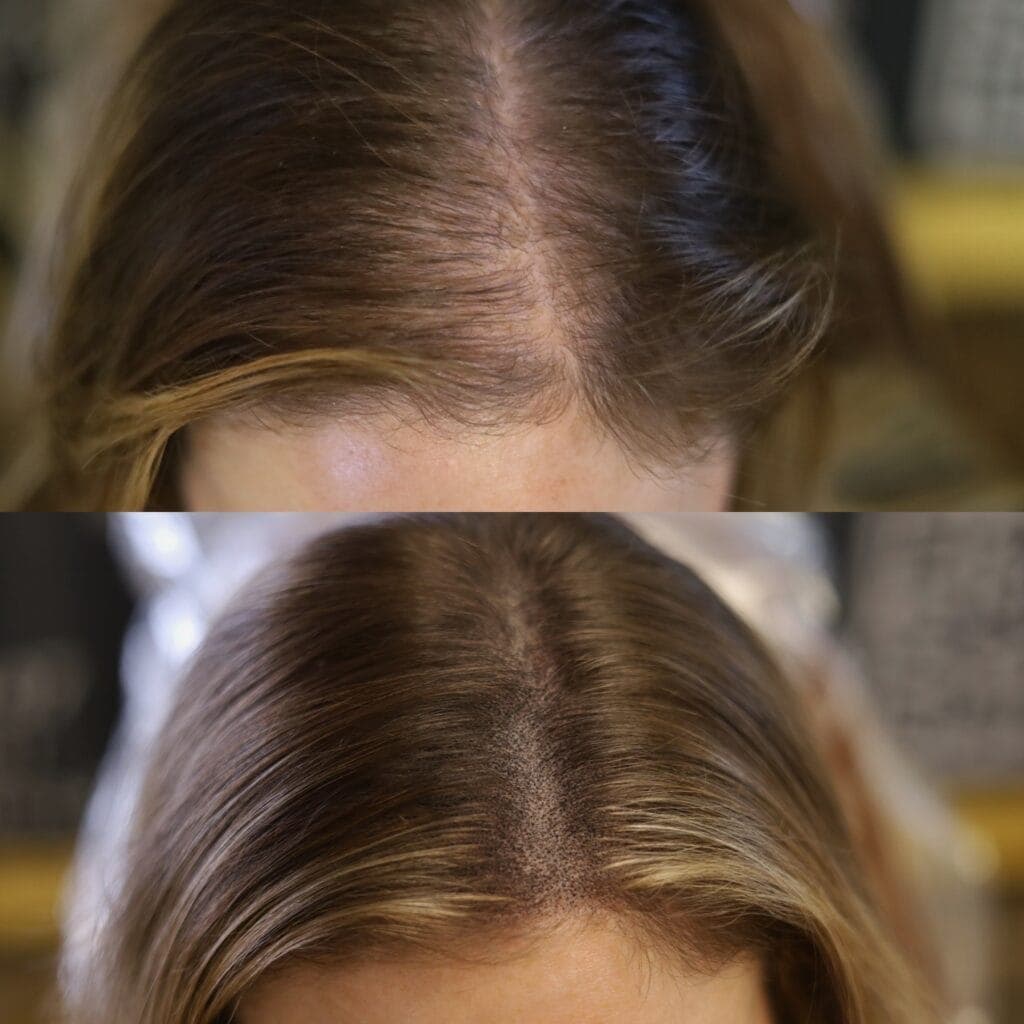
SMP for Women: Quick Overview
How It's Different for Women
Goal: Add density/fullness (NOT shaved head look)
Hair Length: Keep your long hair—no need to shave
Technique: Strategic dot placement between existing hairs
Target: Diffuse thinning, widening part, crown thinning
Result: Scalp less visible through hair = fuller appearance
Key Details
Cost: $1,800-3,200 (similar to men, sometimes slightly more)
Sessions: 2-3 sessions over 4-6 weeks
Pain: 3-5/10 (same as men, very tolerable)
Downtime: Minimal—return to work next day
Results: Noticeable density increase in 6 weeks
Who Is SMP For?
✓ Ideal Candidates:
- • Diffuse thinning (all-over hair loss)
- • Widening center part
- • Crown/vertex thinning
- • Post-pregnancy hair loss
- • Alopecia (areata, traction)
- • Want to keep longer hair
✗ Not Ideal:
- • Minimal hair loss (premature concern)
- • Active autoimmune flare (wait for stability)
- • Expecting perfect coverage (realistic expectations needed)
- • Want to grow hair 6"+ very thick (limited SMP visibility)
Critical Understanding: SMP for women is NOT about creating "fake hair follicles" you can see. It's about adding DENSITY to your scalp so your real hair looks FULLER. You keep your existing hair and length—SMP works between and underneath to hide scalp show-through.
Female Hair Loss: Why It's Different (And Why SMP Works Differently)
Female Pattern Hair Loss vs Male Pattern Baldness
Women and men lose hair VERY differently—which is why SMP techniques must be adapted. Understanding female hair loss patterns is critical to understanding how SMP helps.
| Factor | Male Pattern Baldness | Female Pattern Hair Loss |
|---|---|---|
| Loss Pattern | Receding hairline + bald crown (Norwood scale) | Diffuse thinning on top (Ludwig scale) |
| Hairline | Recedes significantly | Usually stays intact |
| Density Loss | Complete baldness in affected areas | Gradual thinning (hair still present but miniaturized) |
| Part Line | Not applicable (bald areas) | Widens dramatically (scalp very visible) |
| Hair Texture | Hair thins then falls out | Hair becomes finer/thinner (miniaturization) |
| Progression | Predictable (follows Norwood stages) | Variable (hormonal, genetic, medical factors) |
Why This Matters for SMP:
Men's SMP Approach:
- • Creates "shaved head" illusion in completely bald areas
- • Visible dots meant to look like stubble
- • Works best with hair kept very short (0.5-3mm)
- • Full scalp coverage common
Women's SMP Approach:
- • Adds density BETWEEN existing hairs
- • Dots hidden beneath longer hair (not visible)
- • Works with hair any length (short to long)
- • Strategic placement in thinning areas only
The Ludwig Scale: Understanding Female Hair Loss Stages
The Ludwig Scale (equivalent to men's Norwood scale) classifies female pattern hair loss into 3 stages:
Ludwig Stage I (Mild Thinning):
Appearance: Widening of center part (previously 2-3mm, now 5-8mm). Hair still mostly covers scalp but you notice more scalp visibility when hair is pulled back. Volume reduced by 20-30%.
SMP Candidacy: ✓ Excellent candidate. Early intervention prevents psychological distress as thinning progresses. SMP adds density to part line, making scalp less visible. Results very natural since you have good existing hair coverage.
Ludwig Stage II (Moderate Thinning):
Appearance: Significant widening of part (10-15mm). Crown area noticeably thin—scalp clearly visible in overhead lighting. Overall volume reduced 40-60%. Hair feels "limp" and styling is difficult.
SMP Candidacy: ✓✓ Ideal candidate. This is the "sweet spot" where SMP delivers maximum visual impact. Enough existing hair to hide SMP dots, but thinning severe enough that density boost is dramatic and life-changing. 47% of our female clients are Ludwig II.
Ludwig Stage III (Advanced Thinning):
Appearance: Extensive thinning on entire top of scalp. Part line 20mm+ wide. Crown may show complete scalp visibility. Overall volume reduced 60-80%. Difficult to hide with styling.
SMP Candidacy: ✓ Good candidate but realistic expectations critical. SMP will add density but won't fully conceal scalp like it does for Ludwig I-II. May need combination approach: SMP + hair fibers (Toppik) for events, or SMP + hair topper for maximum coverage. SMP provides foundation that makes toppers look more natural.
💡 Planning notes by thinning pattern:
- • Ludwig I: often a good fit for subtle part-line density.
- • Ludwig II: usually needs careful density blending and realistic cost planning.
- • Ludwig III: may need SMP plus fibers, toppers, or another coverage plan for events.
- • Other patterns: alopecia, traction loss, and scar-related cases need a custom consultation.
How SMP Works for Women: Density Enhancement Technique
The "Shadow Effect": Creating Visual Density
SMP for women works on a simple principle: When your scalp shows through thinning hair, it creates a stark contrast (pink/white scalp vs dark hair). This contrast makes hair look thinner than it actually is. SMP adds subtle "shadow" by tattooing tiny dots on the scalp that match your hair color. Result: Less scalp contrast = hair looks fuller and denser.
The Science of Visual Density:
Before SMP (High Contrast):
- • Scalp color: Light pink/white (highly visible)
- • Hair color: Dark brown/black
- • Contrast: 80-90% (extreme)
- • Perception: Eye drawn to scalp gaps = looks very thin
- • Example: 100 hairs per sq inch looks like 50 hairs due to high contrast
After SMP (Low Contrast):
- • Scalp color: Darkened with brown/black pigment (less visible)
- • Hair color: Dark brown/black (same)
- • Contrast: 20-30% (subtle)
- • Perception: Eye sees continuous dark field = looks dense
- • Example: Same 100 hairs now look like 150-200 hairs due to reduced contrast
Real Client Example: Sarah, 42 (Ludwig Stage II)
Before SMP: "My center part was so wide (12mm) that in photos, all you saw was a bright white line down my scalp. I felt like everyone stared at my part instead of my face. I used hair fibers daily but they'd disappear by midday. My confidence was destroyed."
SMP Treatment: 3 sessions over 6 weeks. Pigment color-matched to her dark brown hair. Strategic placement along part line and crown thinning areas. Kept hair at shoulder length throughout treatment.
After SMP (6 months): "Life-changing. My part looks normal again—maybe 4-5mm like it was in my 20s. I don't use hair fibers anymore except for special occasions. The SMP doesn't grow or move, but it creates this constant 'shadow' that makes my hair look way thicker. Nobody knows I have it—they just think my hair looks healthier."
Female SMP Technique: Precision Dot Placement
Women's SMP requires MORE precision and artistry than men's SMP because dots must be perfectly hidden beneath existing hair while still creating density effect. Here's how it works:
1Consultation & Part Mapping (30-45 minutes)
Process: Artist sections your hair to expose scalp completely. Maps thinning areas with photos and measurements. Identifies your natural part line direction and hair growth patterns. Creates "density map" showing where SMP will have maximum impact.
Key Question: "Where do YOU see your scalp most?" (Part line? Crown? Hairline temples?) Treatment prioritizes areas that bother you most.
2Color Matching (Critical for Women)
Process: Artist mixes custom pigment to match your HAIR color (not scalp color). For women with highlighted/multi-tonal hair, blends 2-3 pigment shades for most natural look. Tests pigment on small patch before full treatment.
Special Consideration: Women with lighter hair (blonde, light brown) require specialized lighter pigments. Dark pigment on light-haired women looks unnatural. Expert color matching is CRITICAL.
3Strategic Sectioning During Treatment
Process: Artist sections hair in thin layers (like foil highlighting). Treats one section at a time, working from bottom layer to top. This ensures pigment reaches scalp even in densely haired areas. Each section clipped away as completed.
Time Impact: This sectioning adds 30-60 minutes to procedure time vs men's SMP (women's sessions typically 2.5-3.5 hours vs men's 2-3 hours).
4Dot Pattern & Density Strategy
Process: Instead of uniform coverage (like men), women get GRADIATED density. Highest concentration along part line and baldest areas, fading to lighter concentration in transitional zones. Creates natural "gradient" effect.
Dot Characteristics: Slightly larger dots than men's SMP (0.3-0.5mm vs 0.2-0.3mm). Why? Larger dots create more "shadow coverage" when hidden beneath hair. Smaller dots would be less visible/effective.
Common Misconception: "Will I be able to SEE the dots?"
Answer: NO, not if you have hair. The dots are UNDERNEATH your hair, not on top. When you look in the mirror with your hair down, you won't see individual dots—you'll just see darker scalp that makes hair look fuller.
When dots ARE visible: Only if you part your hair in a different direction and look closely at scalp, or if someone parts your hair to examine your scalp (which doesn't happen in normal life). Even then, dots blend naturally and look like tiny freckles/follicles.
"Do I Have to Shave My Head?" — Hair Length & SMP
No Shaving Required: Keep Your Long Hair
This is the #1 question from women considering SMP, and the answer is DEFINITELY NO. Unlike men who typically get SMP for the "shaved head with stubble" look, women get SMP for DENSITY while keeping their existing hair at ANY length. Short, medium, or long—all work perfectly with SMP.
SMP Works With All Hair Lengths for Women:
Short Hair (1-3"):
- • Ideal length: Maximum SMP visibility
- • Appearance: Very full, dense look
- • Maintenance: Easy styling
- • % of clients: 24%
Medium Hair (3-8"):
- • Ideal length: Perfect balance
- • Appearance: Natural density boost
- • Maintenance: Standard styling works
- • % of clients: 52%
Long Hair (8"+):
- • Works great: SMP hidden underneath
- • Appearance: Fuller at roots/scalp
- • Maintenance: Same as before
- • % of clients: 24%
Real Client Testimonials About Hair Length:
Jennifer, 38 (shoulder-length hair): "I was terrified they'd make me cut my hair. Nope! I kept my hair exactly the same length (12 inches). They just sectioned it during treatment. Now my hair looks thicker at the roots where it matters most. Nobody knows I have SMP."
Michelle, 45 (long hair, 18"): "I've had long hair my whole life—no way was I cutting it. SMP worked perfectly. The artist parted my hair in sections, treated my scalp underneath, and that was it. My hair covers the SMP completely but the scalp 'shadow' makes such a difference in photos and overhead lighting."
Debra, 52 (pixie cut, 2"): "I have a short pixie cut and was worried SMP dots would show. They're completely invisible even with my short hair. The density is amazing—my stylist asked if I'd gotten hair extensions somehow!"
Hair Length Optimization: What Works Best?
While SMP works with any length, certain lengths showcase results better. Here's the honest breakdown:
| Hair Length | SMP Effectiveness | Pros & Cons |
|---|---|---|
| Very Short (0.5-1") | Excellent (9/10) | Pros: Maximum SMP impact, very easy styling, dramatic fullness Cons: Some women uncomfortable with very short hair |
| Short (1-3") | Excellent (9/10) | Pros: Great SMP visibility, fullness at crown/part, manageable styling Cons: None—ideal length |
| Medium (3-6") | Excellent (8.5/10) | Pros: Very natural, great SMP benefit, versatile styling Cons: None—most popular length |
| Shoulder (6-12") | Very Good (8/10) | Pros: Natural look, SMP adds root density, maintains length preference Cons: SMP less visible but still effective |
| Long (12-18") | Good (7/10) | Pros: Keep long hair, SMP improves scalp coverage at roots Cons: Hair weight can flatten roots—may need volumizing products |
| Very Long (18"+) | Fair-Good (6-7/10) | Pros: Keep very long hair if it's important to you Cons: Heavy hair hides SMP benefit, less dramatic results. May need SMP + hair fibers for events. |
💡 Expert Recommendation from Our Queens Clinic:
The "sweet spot" for maximum SMP benefit is 3-8 inches (bob to shoulder length). This length provides enough hair to look feminine and styled, while being light enough that SMP density boost is highly visible. However, we've successfully treated clients with 20"+ hair—it works, just with more subtle (but still valuable) results.
SMP Cost for Women & Treatment Process
Cost Breakdown: $1,800-3,200 (Queens NYC 2026)
| Treatment Extent | Cost Range | What's Included |
|---|---|---|
| Part Line Only | $1,800-2,200 | Strategic density along center part (most visible area). 2 sessions. Ideal for Ludwig I. |
| Part Line + Crown | $2,200-2,800 | Part line density + crown thinning areas. 2-3 sessions. Most common package. Ideal for Ludwig II. |
| Full Top Coverage | $2,800-3,200 | Comprehensive density across entire top scalp. 3 sessions. For Ludwig III or extensive thinning. |
✓ What's Included in Price:
- • Free consultation with before photos
- • Custom pigment color matching
- • 2-3 treatment sessions (spaced 2 weeks apart)
- • Topical numbing cream all sessions
- • Aftercare products & instructions
- • Follow-up assessment 6 weeks post-final session
Additional Costs to Consider:
- • Touch-up every 4-6 years: $600-900
- • Optional 4th session for extra density: $400-600
- • Hair fibers (Toppik) for special events: $15-30/month (optional)
- • Gentle shampoo/conditioner: $25-40 (one-time)
Treatment Timeline: What to Expect (6 Weeks Start to Finish)
Week 0: Session 1 (Foundation Layer)
Duration: 2.5-3 hours
Consultation + color match (45 min), numbing (45 min), treatment (60-90 min)
What Happens:
Artist creates foundation density layer at 30-40% final density. Conservative first pass.
Immediate Result:
Visible density improvement but lighter than final. Pigment darkens over 7 days.
Week 2: Session 2 (Build Layer)
Duration: 2-2.5 hours
Shorter than Session 1—focused on building density in strategic areas
What Happens:
Artist adds 40-50% more density, bringing total to 70-80%. Fills any gaps from Session 1.
Result:
Major improvement visible. Most clients satisfied at this point.
Week 4-6: Session 3 (Perfection Layer)
Duration: 1.5-2 hours
Final refinement session—adds finishing density touches
What Happens:
Fine-tuning to reach 95-100% target density. Adjusts any color or density inconsistencies.
Final Result:
Optimal density achieved. Natural, undetectable appearance.
Post-Treatment Care (Simple for Women):
- • Days 1-4: No washing hair (dry shampoo OK), no sweating, avoid touching scalp
- • Days 5+: Gentle washing with sulfate-free shampoo, pat dry (don't rub)
- • Week 2+: Normal hair care routine, add SPF to part line when hair is pulled back
- • Ongoing: Gentle hair products, daily SPF on exposed scalp areas, touch-up every 4-6 years
Frequently Asked Questions: SMP for Women
Q:Will people be able to tell I have SMP?
A: No—92% of our female clients report that nobody has noticed their SMP. The dots are underneath your hair, not visible on the surface. What people WILL notice is that your hair "looks healthier" or "seems fuller." Most clients get compliments like "Did you get new hair products?" or "Your hair looks great!" but nobody suspects SMP. The only way someone would know is if you told them or they closely examined your scalp with hair parted (which doesn't happen in normal social situations).
Q:Can I still color/highlight my hair after SMP?
A: Yes, absolutely—wait 4 weeks after final SMP session, then resume normal coloring. Hair dye does not affect SMP pigment (it's in your scalp, not your hair). However, if you dramatically change hair color (e.g., dark brown to platinum blonde), the SMP pigment color may no longer match. Solution: Get touch-up with lighter pigment to match new hair color ($400-600). Most clients with highlights/lowlights have no issues—SMP artist blends multiple pigment tones during initial treatment to match your multi-tonal hair.
Q:Does SMP work for blonde or light-colored hair?
A: Yes, but requires specialized lighter pigments—not all SMP artists are experienced with this. For blonde/light brown hair, artist uses custom-mixed lighter pigments (taupes, light browns) instead of standard dark pigments. The key is achieving enough contrast to create "shadow" without making pigment too dark (which would look like dirt/bruising on fair scalps). At Therapeutic Cuts Queens, 18% of our female SMP clients are blonde/light brown—we have extensive experience color-matching lighter hair. Important: Verify your SMP artist has blonde client portfolio before booking.
Q:Can I get SMP if I'm still losing hair (not stabilized)?
A: Yes—unlike hair transplants, SMP doesn't require stabilized hair loss. Why? SMP adds density regardless of whether you continue losing hair. As your hair thins further, the SMP foundation remains, continuing to provide scalp coverage. You may need touch-ups slightly more frequently (every 3-4 years instead of 4-6 years) to maintain density as loss progresses. Many women get SMP while on Rogaine/Finasteride to preserve existing hair—the combination works great. SMP provides immediate cosmetic improvement while medications slow progression.
Q:How does SMP compare to hair toppers/wigs for women?
A: SMP is permanent foundation vs temporary coverage—many women use both together. Comparison: SMP Pros: Permanent, zero daily maintenance, completely undetectable, works in all weather/activities (swimming, gym, wind), no shifting/slipping. SMP Cons: Doesn't add physical hair (just scalp coverage), limited to existing hair density. Toppers Pros: Maximum coverage, instant dramatic volume. Toppers Cons: $300-3,000 cost, daily application, can shift/slip, uncomfortable in heat, obvious in wind/water. Best Approach: Many Ludwig III clients use SMP as "foundation" (darkens scalp) + topper for special occasions. SMP makes toppers look more natural because scalp doesn't show through topper edges.
Q:Is SMP painful? I have lower pain tolerance than most.
A: SMP pain is 3-5/10 with numbing cream—94% of women find it completely tolerable. Pain level similar to eyebrow threading or microblading (if you've done either, you can handle SMP). With topical numbing cream applied 45 minutes before treatment, most women describe it as "annoying scratching sensation" rather than "pain." Scalp is less sensitive than many other body areas. For clients with very low pain tolerance or anxiety, we offer: (1) Premium numbing protocol (stronger 5% lidocaine), (2) Shorter sessions spread across 4 visits instead of 3, (3) Breaks every 30-45 minutes. Post-procedure pain is minimal (1-2/10)—87% of women take zero pain medication after SMP.
Q:Can I get SMP during pregnancy or while breastfeeding?
A: Not recommended during pregnancy; wait until after breastfeeding complete. While SMP pigments are considered safe (organic, non-toxic), there's insufficient research on effects during pregnancy/breastfeeding. Medical consensus: Postpone any cosmetic tattooing until after nursing. Post-pregnancy hair loss (telogen effluvium) is VERY common—affects 40-50% of new mothers 3-6 months postpartum. Good news: This hair loss is usually temporary, recovering within 6-12 months. We recommend waiting 12-18 months postpartum to see if hair recovers naturally before getting SMP. Many women experience permanent density reduction after multiple pregnancies—SMP is excellent solution for persistent post-pregnancy thinning.
Q:Will SMP interfere with future hair transplant if I want one later?
A: No—SMP and hair transplant are fully compatible (can do both). Many women start with SMP for immediate density boost, then add hair transplant 2-3 years later for maximum coverage. SMP doesn't prevent transplant surgery. Minor consideration: SMP pigment may slightly reduce surgeon's visibility during transplant, but experienced surgeons work around this routinely. If you get transplant AFTER SMP, inform your surgeon—they may need extra session to place grafts around existing pigment dots. Alternative approach: Get hair transplant first (18-month wait for full results), then add SMP to boost density between transplanted hairs. Both sequences work well.
Ready to Restore Your Hair Confidence? Get Expert Female SMP in Queens NYC
At Therapeutic Cuts Queens, female SMP consultations focus on thinning pattern, hair color, styling habits, privacy, and realistic density expectations. Book a consultation to compare similar cases and decide whether SMP fits your routine.
Queens, NYC Locations: Serving Flushing, Astoria, Long Island City, Elmhurst, Forest Hills, Jackson Heights, and Woodside. Free consultations include female hair loss assessment, realistic density expectations, custom color matching, and before/after client photos. Women-friendly, private consultation rooms available.
Women’s SMP note
Women’s SMP is usually about density, not a new hairline
For women with thinning hair, SMP is often used to reduce visible scalp contrast through the part, crown, or hairline edge. The work has to be softer than a shaved-head SMP result because it needs to disappear under existing hair.
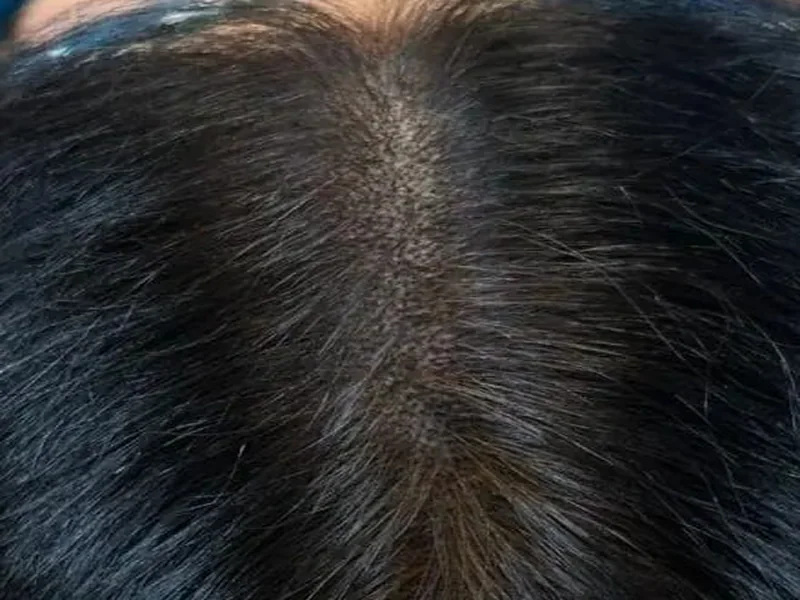
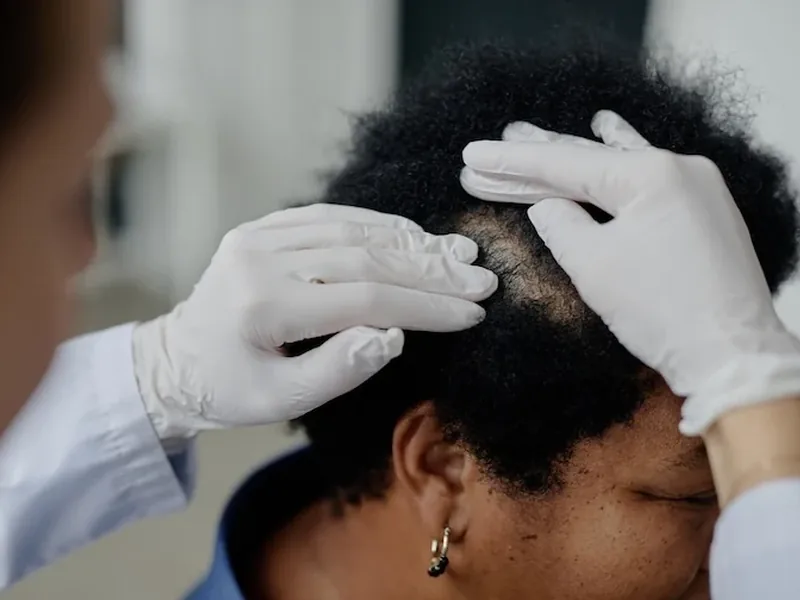

The practical call
The best consultation should talk about lighting, part style, hair color, and whether the thinning is stable before recommending treatment.
Good fit for
- Diffuse thinning through the part or crown
- Women who wear hair long enough to cover the treated area
- Clients who want less scalp show-through in photos and bright lighting
Ask about
- A density plan that matches your part and hair color
- A conservative pigment test if needed
- Guidance on styling after healing
Be careful with
- Male shaved-head examples as proof for women’s work
- Over-dark dots along the part
- Treating active shedding without medical context
Related SMP Guides
SMP Cost Guide 2026
Complete pricing breakdown including women's SMP packages
SMP Process & Procedure
Step-by-step guide to the SMP treatment process
SMP Pain & Recovery
Pain expectations and recovery timeline for women
SMP Aftercare Guide
Protecting your SMP investment with proper care
SMP Longevity & Touch-Ups
How long SMP lasts for women and touch-up expectations
SMP Services Queens
Expert scalp micropigmentation services at Therapeutic Cuts