SMP for Scars & Alopecia Treatment: Complete Guide for Queens, NYC (2026)
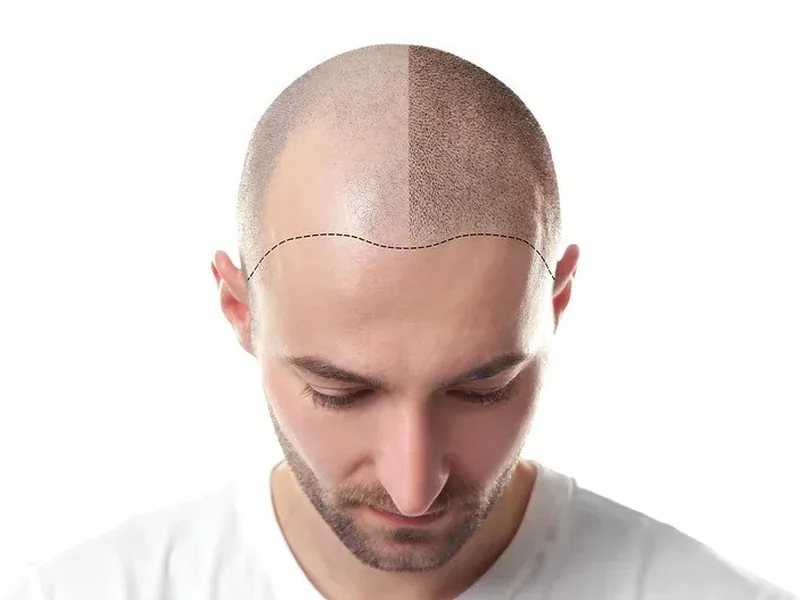
Can scalp micropigmentation camouflage scars from hair transplants, injuries, or surgeries? Can SMP help with alopecia areata, traction alopecia, or alopecia totalis? This complete guide covers everything you need to know about SMP for scar concealment and alopecia treatment in Queens, NYC—including realistic expectations (70-85% coverage vs 90-95% for normal scalp), multi-session requirements, costs ($2,200-3,800), medical clearance, and success rates by condition.
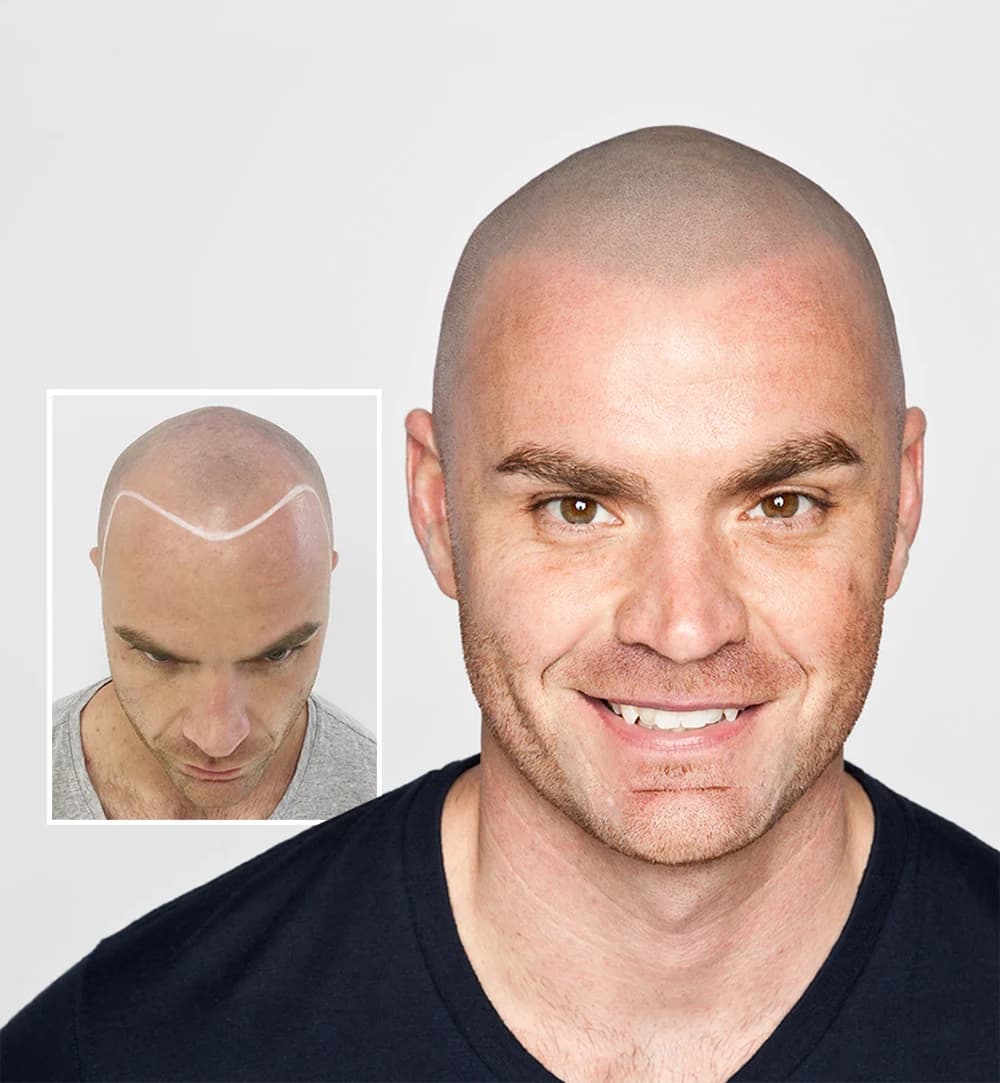
Are You a Candidate for SMP Scar/Alopecia Treatment?
Good Candidates:
- Stable hair transplant scars (FUE/FUT) healed 12+ months
- Stable alopecia areata no new patches 6+ months
- Injury/surgery scars healed 18+ months, no keloid tendency
- Traction alopecia from tight hairstyles (braids, ponytails)
- Realistic expectations: 70-85% concealment, not invisibility
- Budget for multiple sessions (2-4 sessions, $2,200-3,800)
- Medical clearance from dermatologist for active conditions
Poor Candidates:
- Active alopecia areata: New patches appearing, spreading
- Keloid scarring history: High risk pigment rejection
- Fresh scars: Less than 12 months healed (tissue still changing)
- Hypertrophic scars: Raised, thick scar tissue (poor pigment retention)
- Autoimmune flares: Lupus, psoriasis, eczema actively flaring
- Unrealistic expectations: Expecting 100% invisibility
- No dermatologist clearance for active alopecia conditions
Understanding SMP for Scars: Types & Treatment Approaches
Scalp micropigmentation can effectively camouflage many types of scars, but results depend heavily on scar type, age, and tissue quality. Unlike standard SMP on normal scalp (90-95% natural appearance), scar camouflage typically achieves 70-85% concealment due to different tissue characteristics.
1. Hair Transplant Scars (Most Common)
FUT Strip Scars (Linear Scars):
Appearance:
Horizontal linear scar across back of head, 15-25cm long, 1-3mm wide (thin) to 5-10mm wide (thick)
SMP Success Rate:
75-90% concealment for thin scars (<3mm), 60-75% for thick scars (>5mm)
Sessions Required:
2-3 sessions (scar tissue absorbs pigment differently, needs layering)
Realistic Expectation:
FUT scars will blend significantly with surrounding hair follicle appearance, reducing visibility by 70-85%. Scar won't be completely invisible—up close (<30cm), trained eye can still detect slight difference in texture/shading. From normal social distance (1+ meter), scar is difficult to notice.
FUE Dot Scars (Circular Scars):
Appearance:
Hundreds to thousands of tiny circular scars (0.8-1.2mm diameter), spread across donor area (back/sides of head)
SMP Success Rate:
85-95% concealment (excellent results, similar to normal scalp)
Sessions Required:
2-3 sessions (blend FUE dots with natural follicle appearance)
Realistic Expectation:
FUE scars respond extremely well to SMP (often indistinguishable from normal scalp). Small circular scar size closely matches SMP dot size (0.3-0.5mm), creating seamless blend. Success rate similar to standard SMP on non-scarred tissue.
2. Injury & Surgery Scars
| Scar Type | Description | SMP Success Rate | Sessions Needed | Key Challenges |
|---|---|---|---|---|
| Accident/Injury Scars | Irregular shapes from falls, accidents, head trauma. Variable depth/width. | 70-85% | 2-4 | Irregular texture, potential keloid formation, unpredictable pigment retention |
| Surgery Scars (non-transplant) | From brain surgery, tumor removal, other medical procedures. Often linear. | 65-80% | 3-4 | Thick tissue, poor vascularity, may require medical clearance |
| Burn Scars | From thermal burns. Varies from superficial to deep tissue damage. | 50-70% | 3-5 | Damaged tissue structure, poor pigment retention, high fading risk |
| Keloid Scars | Raised, thick scar tissue extending beyond original injury. Overactive healing. | 30-50% | 4-6 | High rejection risk, SMP may trigger more keloid growth (often not recommended) |
| Atrophic Scars | Depressed scars below surrounding skin level (sunken appearance). | 60-75% | 2-4 | Shadowing from depression makes pigment appear darker, requires lighter shading |
Important: Scar Age Requirements
- • Hair transplant scars: Wait 12+ months after surgery (tissue fully stabilized)
- • Injury/surgery scars: Wait 18-24 months (longer healing time for trauma)
- • Burn scars: Wait 24+ months (damaged tissue needs extensive remodeling)
- • Why wait? Scar tissue changes color/texture for up to 2 years. Premature SMP on "moving target" leads to poor color matching and uneven results.
Understanding SMP for Alopecia: Types & Treatment Success
Alopecia (hair loss from autoimmune or non-autoimmune causes) presents unique challenges for SMP. Success depends on whether condition is stable or active. Active alopecia (new patches appearing) is contraindicated—SMP on unstable tissue risks poor outcomes and disease progression.
1. Alopecia Areata (Autoimmune Patchy Hair Loss)
What is Alopecia Areata?
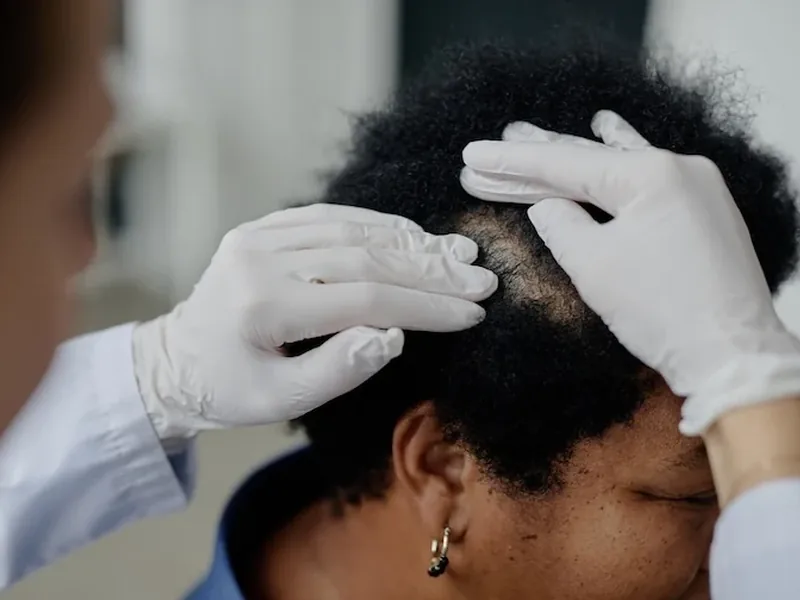
Autoimmune condition where body's immune system attacks hair follicles, causing round/oval bald patches (typically 1-5cm diameter). Can occur anywhere on scalp, beard, or body.
Stability Requirements for SMP:
- • No new patches for 6-12 months minimum
- • No existing patch expansion for 6+ months
- • Dermatologist clearance required (written confirmation stability)
- • No active treatment changes (steroids, immunotherapy stable dosage)
SMP Success by Stability:
Stable 12+ Months:
75-85% success rate. Patches blend well with SMP, creates illusion of short shaved hair. Satisfaction high if realistic expectations set.
Stable 6-12 Months:
60-75% success rate. Moderate risk of new patches developing post-SMP. May require touch-ups or expansion sessions.
Active (<6 Months Stable):
NOT RECOMMENDED. High risk of disease progression, poor pigment retention, potential autoimmune reaction to tattoo ink.
2. Traction Alopecia (Hair Loss from Tight Hairstyles)
What is Traction Alopecia?
Hair loss from prolonged tension/pulling on hair follicles. Common from tight braids, ponytails, extensions, weaves, cornrows. Primarily affects hairline, temples, crown.
Good news: Traction alopecia is NOT autoimmune. Once hairstyle habits change (no more tension), condition stabilizes quickly. Excellent SMP candidate.
SMP Success Rate:
- • Overall: 85-95% success (similar to normal scalp SMP)
- • No medical clearance required (not autoimmune/medical condition)
- • Fast stabilization: 3-6 months after stopping tight hairstyles
Treatment Approach:
Step 1: Eliminate Tension
Stop tight hairstyles 6+ months before SMP. Allows follicles to recover (some hair regrowth possible).
Step 2: Assess Regrowth
After 6 months, evaluate natural regrowth. SMP fills in areas that didn't recover naturally.
Step 3: SMP Application
2-3 sessions, focusing on thinned hairline/temples. Blends with natural hair density.
3. Other Alopecia Types & SMP Candidacy
| Alopecia Type | Description | SMP Candidacy | Success Rate | Special Considerations |
|---|---|---|---|---|
| Alopecia Totalis | Complete scalp hair loss (autoimmune). No hair anywhere on head. | Conditional | 70-85% | Requires 12+ months stability, dermatologist clearance. Full scalp SMP ($3,500-4,500). Creates shaved head appearance. |
| Alopecia Universalis | Complete body hair loss (autoimmune). No eyebrows, eyelashes, body hair. | Conditional | 70-85% | Same as totalis. May also do eyebrow SMP ($800-1,200). Requires highest stability proof. |
| Alopecia Barbae | Patchy beard hair loss (autoimmune). Round bald spots in beard area. | Good | 80-90% | 6+ months stability required. Beard SMP ($600-1,200). Excellent results for stable patches. |
| Androgenetic Alopecia (Male/Female Pattern) | Genetic hair loss from DHT sensitivity. Receding hairline, crown thinning. | Excellent | 90-95% | NOT autoimmune. No medical clearance needed. Standard SMP procedure. Best candidate type. |
| Scarring Alopecia (Cicatricial) | Hair loss from follicle destruction (infection, inflammation, injury). Permanent. | Conditional | 65-80% | Must be inactive 12+ months. Dermatologist clearance required. Higher fading risk due to scar tissue. |
SMP Scar/Alopecia Procedure: What to Expect & Costs
Cost Comparison: Scar/Alopecia SMP vs Standard SMP
| Treatment Type | Sessions Required | Cost Per Session | Total Cost | Why More Expensive? |
|---|---|---|---|---|
| Standard SMP (normal scalp) | 2-3 | $800-1,200 | $1,500-3,500 | Baseline comparison. Normal pigment retention, predictable results. |
| Hair Transplant Scar SMP (FUT/FUE) | 2-3 | $900-1,400 | $2,200-3,800 | Scar tissue requires more ink passes, custom color matching, specialized technique. |
| Injury/Surgery Scar SMP | 3-4 | $900-1,400 | $2,500-4,200 | Irregular scar shapes, unpredictable pigment retention, more sessions for layering. |
| Alopecia Areata SMP (stable patches) | 2-3 | $800-1,300 | $1,800-3,600 | Slightly higher due to medical clearance requirements, potential follow-up needs. |
| Traction Alopecia SMP | 2-3 | $800-1,200 | $1,600-3,500 | Similar to standard SMP (no autoimmune complexity). Slightly higher if extensive hairline work. |
| Alopecia Totalis SMP (full scalp) | 3-4 | $1,200-1,600 | $3,500-5,500 | Full head coverage, medical clearance, higher skill requirement, longer sessions. |
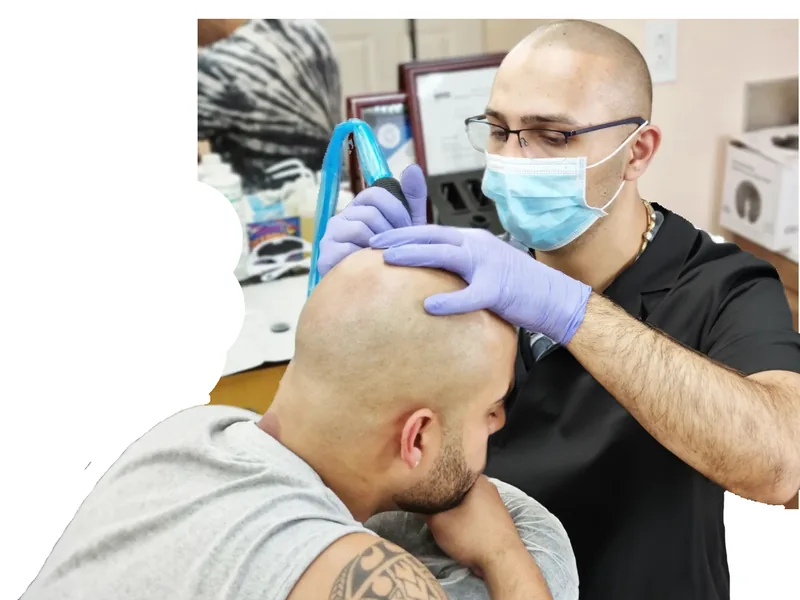
Session-by-Session Breakdown: Scar Camouflage SMP
1Session 1: Foundation Layer (Week 1)
Duration:
2-3 hours (scar work takes longer than normal scalp)
Technique:
Light pigment application, test scar tissue response, establish color match
Coverage:
30-40% opacity (intentionally light—scar tissue unpredictable)
What You'll See:
Faint coverage, scar still visible. This is expected—building gradually.
2Session 2: Building Density (Week 4-6)
Duration:
2-3 hours
Technique:
Layer additional pigment, fill in gaps from session 1 healing, refine color
Coverage:
60-70% opacity (significant improvement from session 1)
What You'll See:
Much better blending. Scar visibility reduced 50-60%. Getting close to final result.
3Session 3: Final Refinement (Week 8-12)
Duration:
1.5-2 hours (touch-up smaller areas)
Technique:
Address any remaining light spots, perfect color uniformity, fine-tune edges
Coverage:
70-85% opacity (final result for most clients)
What You'll See:
Scar blended with surrounding hair appearance. From 1+ meter distance, very difficult to notice.
4Session 4 (Optional): Advanced Correction (Month 4-6)
Who Needs This:
Thick FUT scars, hypertrophic scars, burn scars (poor initial retention)
Technique:
Additional density passes, custom shading to address texture differences
Coverage Gain:
Push from 70-75% to 80-85% (diminishing returns beyond this)
Cost:
$600-1,000 additional (not always included in initial package)
Why Scar SMP Requires More Sessions Than Standard SMP
1. Pigment Retention Differences: Scar tissue has damaged collagen structure, different vascularity. Pigment retention 60-75% vs 85-95% on normal scalp. Multiple passes needed to build adequate density.
2. Color Unpredictability: Scar tissue may heal lighter or darker than surrounding skin. Conservative first session allows assessment before committing to full opacity.
3. Texture Challenges: Scars have different surface texture (smoother, shinier). Pigment must be layered strategically to compensate for light reflection differences.
4. Blending Complexity: Sharp scar borders require gradual feathering technique to avoid "stamped on" appearance. Takes multiple sessions to perfect seamless transition.
Medical Clearance & Safety Requirements
Not all SMP clinics require medical clearance—but they should. At Therapeutic Cuts, we ALWAYS require dermatologist clearance for autoimmune alopecia conditions before proceeding. This protects both client health and treatment investment.
When Medical Clearance is REQUIRED:
Autoimmune Conditions:
- Alopecia areata (patchy autoimmune hair loss)
- Alopecia totalis (complete scalp hair loss)
- Alopecia universalis (complete body hair loss)
- Scarring alopecia (cicatricial alopecia from follicle destruction)
- Lupus-related hair loss
- Lichen planopilaris
- Psoriasis of the scalp (active or history)
Why? These conditions can flare unpredictably. Tattooing on active autoimmune tissue risks disease progression, poor healing, and pigment rejection.
Scar-Related Conditions:
- Keloid scarring history (overactive scar formation)
- Hypertrophic scars (raised, thick scars)
- Recent surgery scars (<18 months healed)
- Radiation-treated skin (cancer treatment)
- Active skin infections (folliculitis, dermatitis)
Why? Compromised skin healing increases infection risk, pigment rejection, and keloid recurrence. Medical assessment ensures tissue is stable enough for tattooing.
What Dermatologist Clearance Involves:
- Step 1: Schedule Dermatologist Appointment
Book appointment explaining you're seeking SMP and need clearance letter. Bring photos of scar/alopecia area.
- Step 2: Dermatologist Evaluation
Doctor examines scalp/scar, reviews medical history, confirms condition stability. May request biopsy if diagnosis unclear.
- Step 3: Written Clearance Letter
Dermatologist provides signed letter confirming: (1) Diagnosis, (2) Stability duration, (3) No medical contraindications to scalp tattooing, (4) Patient understands risks.
- Step 4: Submit to SMP Clinic
Provide clearance letter to SMP practitioner before booking. Most clinics require clearance dated within 3 months of treatment.
Cost of Medical Clearance: $150-350
Dermatologist consultation for SMP clearance typically costs $150-250 (specialist co-pay) to $250-350 (out-of-pocket without insurance). Factor this into total SMP cost. While expensive, clearance is essential—proceeding without it risks health complications and wasted SMP investment ($2,000-5,000).
Realistic Expectations: What Scar/Alopecia SMP Can & Can't Do
Setting Realistic Expectations:
What SMP CAN Do:
- ✓Significantly reduce scar visibility (70-85% concealment from social distance 1+ meter)
- ✓Create illusion of hair density in alopecia-affected areas
- ✓Blend FUT scars with surrounding hair follicle appearance (75-90% success)
- ✓Camouflage FUE dot scars (85-95% success, nearly invisible)
- ✓Restore confidence by minimizing psychological impact of visible scars/patches
- ✓Work on stable alopecia (6-12+ months no new patches/expansion)
- ✓Provide long-term solution (3-5 years before touch-up typically needed)
What SMP CANNOT Do:
- ✗Make scars 100% invisible (texture differences always detectable up close <30cm)
- ✗Grow real hair (SMP is illusion of follicles, not hair regrowth treatment)
- ✗Stop alopecia progression (if condition reactivates, new patches will appear)
- ✗Fix keloid scars reliably (30-50% success, high rejection risk)
- ✗Camouflage raised/depressed scars perfectly (3D texture creates shadowing issues)
- ✗Work on fresh scars (<12 months, tissue still changing color/texture)
- ✗Guarantee color match (scar tissue heals differently, may lighten/darken over time)
Real Client Experiences: Success Rates by Condition
Marcus T., 34 - FUT Scar Camouflage (2023)
"I had a 20cm FUT scar from 2019 hair transplant. Super self-conscious—always wore hat. After 3 SMP sessions, scar is like 80% gone. You can still see it if you look close, but from normal distance? Nobody notices. I can finally buzz my hair without shame."
Jessica L., 29 - Alopecia Areata (Stable 18 Months)
"Developed alopecia areata at 26. Three patches on crown, totally destroyed my confidence. Been stable for 18 months, dermatologist cleared me for SMP. After treatment, patches blend with rest of my hair (I keep it short). Literally life-changing—I feel like myself again."
David K., 42 - Traction Alopecia (Hairline)
"Used to slick my hair back super tight with gel (classic 90s style lol). By 35, hairline was wrecked—temples completely bald. Stopped tight styles, waited 6 months, got SMP. Filled in temples perfectly. Looks totally natural. Wish I'd done this years ago."
Brian R., 38 - Surgery Scar (Partial Success)
"Had brain surgery in 2018, left 8cm scar on side of head. Got SMP in 2022 (4 sessions). Scar is better—maybe 65% less visible? But it's still noticeable if you know to look. Tissue is thick, pigment didn't hold as well as hoped. Not mad, but expected more based on before/after photos I saw online."
Frequently Asked Questions
Q:Can SMP completely hide my FUT scar so it's 100% invisible?
No—realistically, SMP achieves 75-90% concealment for FUT scars, not 100% invisibility. Here's why:
- Texture difference: Scar tissue is smoother/shinier than surrounding scalp. Pigment can match color, but can't change physical texture.
- 3D structure: Thin FUT scars (<3mm) achieve 80-90% concealment. Thick scars (>5mm) only 60-75% due to raised tissue.
- Close inspection: At <30cm distance, trained eye can detect slight difference. From 1+ meter (normal social distance), scar is very difficult to notice.
Beware clinics promising "100% invisible scars"—this is marketing hype. Reputable practitioners set realistic expectations: significant improvement (70-90% reduction), not complete erasure.
Q:I have alopecia areata that's been stable for 8 months. Can I get SMP now or should I wait longer?
8 months stability is borderline—we recommend waiting until 12+ months for lowest risk. Here's why:
Risk Assessment by Stability Duration:
- 6-9 months stable: 30-40% risk of new patches appearing within 2 years post-SMP
- 9-12 months stable: 20-30% risk
- 12-18 months stable: 10-15% risk
- 18+ months stable: <10% risk (lowest risk category)
If new patches develop post-SMP, you'll need additional sessions to camouflage them ($800-1,200 per session). Waiting 4 more months (to reach 12-month mark) significantly reduces this risk.
Exception: If your dermatologist assesses your alopecia as particularly stable (e.g., triggered by one-time stress event, no family history), they may clear you at 8-9 months. Always follow dermatologist guidance.
Q:How much does scar/alopecia SMP cost in Queens, NYC? Is it more expensive than regular SMP?
Yes, scar/alopecia SMP typically costs 20-40% more than standard SMP due to increased complexity:
Queens, NYC Pricing (2026):
- • Standard SMP (normal scalp): $1,500-3,500 (2-3 sessions)
- • Hair transplant scar SMP: $2,200-3,800 (2-3 sessions)
- • Injury/surgery scar SMP: $2,500-4,200 (3-4 sessions)
- • Alopecia areata SMP: $1,800-3,600 (2-3 sessions + medical clearance)
- • Alopecia totalis SMP: $3,500-5,500 (3-4 sessions, full head)
Why more expensive?
- Scar tissue requires more ink passes (lower pigment retention)
- Custom color matching needed (scar tissue different tone than normal skin)
- Longer sessions (2-3 hours vs 1.5-2 hours for standard SMP)
- More sessions typically required (3-4 vs 2-3)
- Higher skill level/experience required
- Medical clearance coordination for alopecia cases
Payment plans available: Most Queens SMP clinics offer payment plans ($200-400/month over 6-12 months). Ask during consultation.
Q:Will SMP on my scar fade faster than SMP on normal scalp?
Yes—SMP on scar tissue typically fades 20-30% faster than normal scalp SMP. Here's the breakdown:
Fading Timeline Comparison:
- • Normal scalp SMP: Noticeable fading at 4-6 years, touch-up needed 5-7 years
- • FUT scar SMP: Noticeable fading at 3-4 years, touch-up needed 4-5 years
- • Injury/surgery scar SMP: Noticeable fading at 2.5-3.5 years, touch-up needed 3-4 years
- • Alopecia SMP (stable): Similar to normal scalp (4-6 years)
Why faster fading on scars?
- Poor vascularity: Scar tissue has fewer blood vessels. Limited blood flow means slower pigment integration, faster breakdown.
- Collagen differences: Scar tissue collagen is organized differently (parallel fibers vs basket-weave). Pigment particles sit less stably.
- UV sensitivity: Scars often slightly lighter, absorb more UV radiation, accelerating pigment breakdown.
Touch-up costs: $600-1,000 per session (every 3-5 years). Factor this into lifetime cost analysis. Despite faster fading, SMP still most cost-effective permanent scar camouflage option.
Q:I have traction alopecia from years of tight braids. Do I need medical clearance for SMP?
No—traction alopecia does NOT require medical clearance because it's not an autoimmune or medical condition. It's mechanical damage from prolonged hair tension.
What you DO need to do:
- Stop tight hairstyles 6+ months before SMP: Eliminate braids, ponytails, extensions, weaves, cornrows. Constant tension prevents healing and SMP results.
- Allow natural regrowth assessment (6 months): Some follicles may recover once tension removed. Wait 6 months to see how much natural regrowth occurs.
- Commit to loose hairstyles post-SMP: Reverting to tight styles post-SMP will damage remaining hair AND cause SMP to look unnatural (pigment dots surrounded by bald patches).
Success rate for traction alopecia SMP: 85-95% (excellent). Responds similar to standard SMP because underlying tissue is healthy (just follicles destroyed by mechanical damage, not autoimmune attack).
Cost: $1,600-3,500 depending on affected area size. Typically focuses on hairline and temples (most common traction alopecia zones).
Q:Can SMP camouflage keloid scars? I had bad keloid reaction to ear piercing years ago.
Keloid scarring history is a MAJOR red flag for SMP—success rate only 30-50%, and risk of triggering new keloid growth is significant.
The problem with keloids + SMP:
- Keloids = overactive scarring response. Body produces excessive collagen when skin injured. SMP tattooing creates micro-injuries, potentially triggering new keloid formation.
- Poor pigment retention: Keloid tissue is dense, raised, with abnormal collagen structure. Pigment particles don't integrate well (50-70% rejection rate).
- Risk of making scar worse: In 20-30% of cases, SMP on keloid-prone individuals triggers keloid expansion or new keloid formation around pigment dots.
Should you attempt SMP with keloid history?
Only if:
- Dermatologist approves AND supervises treatment (written clearance mandatory)
- You have only ONE keloid (ear piercing) and NO keloids from other injuries/surgeries
- Willing to accept 30-50% chance of poor results
- Willing to risk triggering new keloid growth (10-20% chance)
- Test patch performed first (small 1cm² area to assess response before committing to full treatment)
Recommendation: Most ethical SMP practitioners will decline keloid-prone clients or require extremely conservative approach with test patches and dermatologist monitoring. If practitioner doesn't express concern about your keloid history, that's a red flag—find more experienced provider.
Q:How long after hair transplant surgery can I get SMP to cover the scar?
Wait minimum 12 months after FUT or FUE hair transplant before getting SMP. Ideally wait 18 months for best results.
Why the long wait?
- Scar maturation timeline: Hair transplant scars evolve for 12-24 months post-surgery. Color changes from red (months 0-3) → pink (months 3-6) → light (months 6-12) → final color (12-18 months).
- Width changes: FUT scars often widen during months 6-12 as tension on scalp pulls scar edges apart. SMP before stabilization means color mismatch or inadequate coverage width.
- Hair transplant growth timeline: Transplanted hair takes 12-18 months to fully grow. Density assessment impossible before this—you might SMP areas that end up growing decent hair coverage naturally.
Timeline recommendation:
- • Month 12: Earliest acceptable for SMP (FUT/FUE scars reasonably stable)
- • Month 18: Ideal timing (scar fully matured, transplant results finalized)
- • Month 24+: Also fine (no upper limit, as long as scar stable)
Q:Does SMP hurt more on scar tissue compared to normal scalp?
Surprisingly, scar tissue SMP often hurts LESS than normal scalp SMP because scar tissue has fewer nerve endings.
Pain comparison (client reports, 1-10 scale):
- • Normal scalp SMP: 3-5/10 average (with numbing cream)
- • FUT scar SMP: 2-4/10 average (less sensation in scar tissue)
- • Old injury scar SMP: 1-3/10 average (significantly less nerve density)
- • Alopecia-affected scalp: 3-5/10 (same as normal scalp, no nerve changes)
Exception: Fresh scars (<18 months)
Fresh scars may be MORE sensitive during healing phase (months 3-12) due to inflammation and nerve regrowth. Another reason to wait 12-18 months before SMP.
Pain management: All Therapeutic Cuts SMP sessions include topical numbing cream (lidocaine 5%). Applied 30 minutes before treatment, reapplied as needed during session. 95% of clients rate pain as "tolerable" or "minimal."
Ready to Camouflage Your Scar or Treat Alopecia with SMP in Queens?
At Therapeutic Cuts, we specialize in scar camouflage and alopecia SMP treatment with over 500 successful scar cases completed. Our SMP specialists have advanced training in scar tissue pigmentation, color matching, and working with dermatologists for medical clearance.
Free Scar/Alopecia Assessment
$0 consultation. Photo review + candidacy evaluation. We'll honestly tell you if SMP is right for your condition (even if answer is "no").
Medical Clearance Coordination
We work directly with your dermatologist to obtain proper clearance for autoimmune conditions. Guidance on what documentation needed.
📍 Location: 63-53 Alderton St, Rego Park, NY 11374 (near 7 train, M/R lines)
⏰ Walk-ins welcome | Online booking available | Evening/weekend appointments
Related SMP Guides
SMP Process & Procedure Complete Guide
Step-by-step breakdown of SMP procedure, session timeline, what to expect during treatment.
SMP Aftercare & Maintenance Guide
Complete aftercare instructions for scar/alopecia SMP healing, dos/don'ts, maintenance tips.
SMP Longevity & Touch-Ups Guide
How long does scar SMP last? Touch-up frequency, costs, fading factors specific to scar tissue.
SMP for Receding Hairlines
How SMP restores hairline appearance, design considerations, before/after expectations.
SMP vs Hair Transplant Comparison
Cost, timeline, results comparison. Which hair loss solution is right for you?
SMP for Women Complete Guide
Female-specific SMP for diffuse thinning, widening part, female pattern hair loss. Keep long hair while getting density boost.